
The Only Meals I Actually Plan (And What I Don’t Bother With)
For a long time, I thought meal planning meant planning every single meal, every day.
Every meal, every day, every detail.
And every time I tried to do that, I burned out fast.
What finally made meal planning work for me wasn’t finding a better planner or a more detailed system — it was realizing that not everything needs to be planned to make it work.
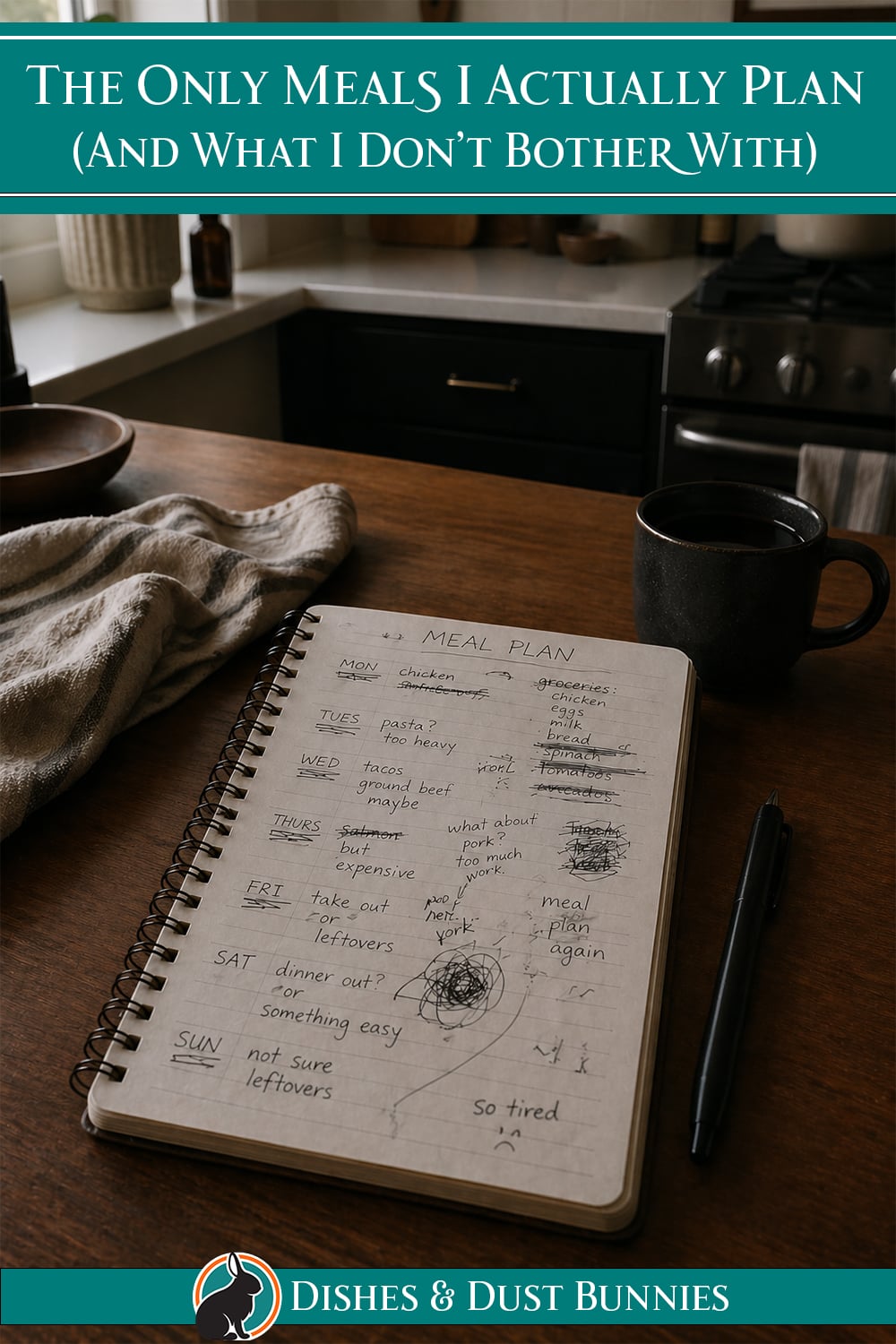
Why Planning Less Works Better
Planning everything sounds responsible, but in real life it’s exhausting.
The more decisions you try to make ahead of time, the more mental energy it takes to maintain the plan. And when life inevitably changes, it’s easy to feel like you failed — even when the plan was unrealistic to begin with.
Planning less gives you breathing room. It reduces decision fatigue, lowers pressure, and makes it much easier to keep going week after week.
The Meals I Actually Plan
At this point, I’m really intentional about what I plan — and what I don’t.
I Plan Dinner
Dinner is where most of the stress lives, so it’s the only meal I consistently plan.
Knowing what’s for it removes the biggest daily question, and everything else tends to fall into place more easily once that’s handled.
Even then, I don’t plan every dinner. I usually plan just four or five, leaving room for leftovers, easy nights, or changes.
I Sometimes Plan Certain Nights
Some nights benefit from a little extra intention.
That might include:
- A busier weekday when I know energy will be low
- A night I want leftovers for the next day
- A comfort meal after a long or stressful day
These aren’t rigid assignments. They’re just gentle anchors in the week.
I Plan Around Effort Levels
Instead of planning meals for specific days, I think in terms of effort.
I make sure my plan includes:
- A couple of very low-effort meals
- A few medium-effort meals
- Maybe one higher-effort meal if it feels realistic
This gives me the flexibility to choose what fits my energy that day instead of forcing myself to follow a schedule.
What I Don’t Bother Planning
This part matters just as much.
Letting go of certain things was the key to making meal planning feel manageable.
I Don’t Plan Breakfast
Breakfast usually repeats itself naturally.
It’s usually something simple, familiar, and quick, and planning it just adds unnecessary mental load.
I Don’t Plan Lunch
Lunch is almost always leftovers, something assembled quickly, or a “figure it out” meal.
Trying to plan lunches in advance never stuck for me, and it didn’t make my days easier, so I stopped.
I Don’t Plan Snacks
Snacks are usually based on what we have and what sounds good in the moment.
As long as there are a few options on hand, there’s no need to plan them out ahead of time.
I Don’t Assign Meals to Specific Days
This was a big shift for me.
I stopped tying meals to exact days of the week and started choosing based on how the day feels. That one change removed so much guilt and frustration.
The plan is there to support me, not to boss me around.
How This Simplifies Everything
When you plan less, you think about food less throughout the day.
You spend less time adjusting plans, feeling behind, and wondering if you’re doing it “right.”
The plan becomes a tool instead of something that adds pressure.
If Planning Everything Feels Like Too Much
If meal planning has never really worked for you, this might be why.
You don’t need to plan more. You probably just need to plan less.
Start by planning only dinners, or just a few meals, or even just the parts of the week that feel stressful.
That still counts, and it’s enough.
Meal Planning Is About Support, Not Control
A good meal planning system should make your life easier, not more rigid.
You’re allowed to leave things unplanned. You’re allowed to change your mind, and do things differently from week to week.
The only meals you have to plan are the ones that help your home run more smoothly.
Everything else is optional, and that’s what makes it work.
More Articles in the Simple Meal Planning for Busy Families (Without Losing Your Mind) Series
If you’re trying to make meal planning easier without complicated systems or overspending, these articles will help you build a simple, realistic approach and figure out what actually matters.
- How to Start Meal Planning When You Hate Planning — a simple, realistic way to get started without overthinking
- The Only Meals I Actually Plan (And What I Don’t Bother With) — a realistic look at what’s actually worth planning (and what you can skip)
- My Lazy Meal Planning System (No Charts, No Stress) — a simple system that keeps meal planning manageable
- How to Make Dinner Time Less Stressful (Without Overcomplicating It) — simple, practical ways to make evenings feel easier
- Backup Dinners: The Secret to Stress-Free Meal Planning — easy backup meal ideas for when real life happens
- Making Leftovers Work for Easy Meals (Without getting Bored) — simple ways to turn leftovers into meals you’ll actually want
- Smart Ways to Use Leftovers That Actually Work — practical ways to turn leftovers into new meals
- How I Meal Plan on a Tight Budget When Grocery Prices Are High — realistic strategies to save money on groceries
- 10 Budget-Friendly Ingredients That Help Stretch Meals Further — simple staples that help meals go further
- How to Plan Meals So Leftovers Are Easy to Use (coming soon) — plan meals with leftovers in mind so they’re easier to reuse
- Low Energy Meal Planning (For Tired Weeks) (coming soon)
- When Meal Planning Systems Become Overplanning (coming soon)
