
My Lazy Meal Planning System (No Charts, No Stress)
If traditional meal planning systems make you feel overwhelmed before you even start, you’re not doing anything wrong. Most of those systems simply aren’t built for real family life.
I’ve tried the charts. I’ve tried the planners. I’ve even tried writing out full weeks of meals in advance. Every time, I ended up feeling frustrated, behind, or ready to quit.
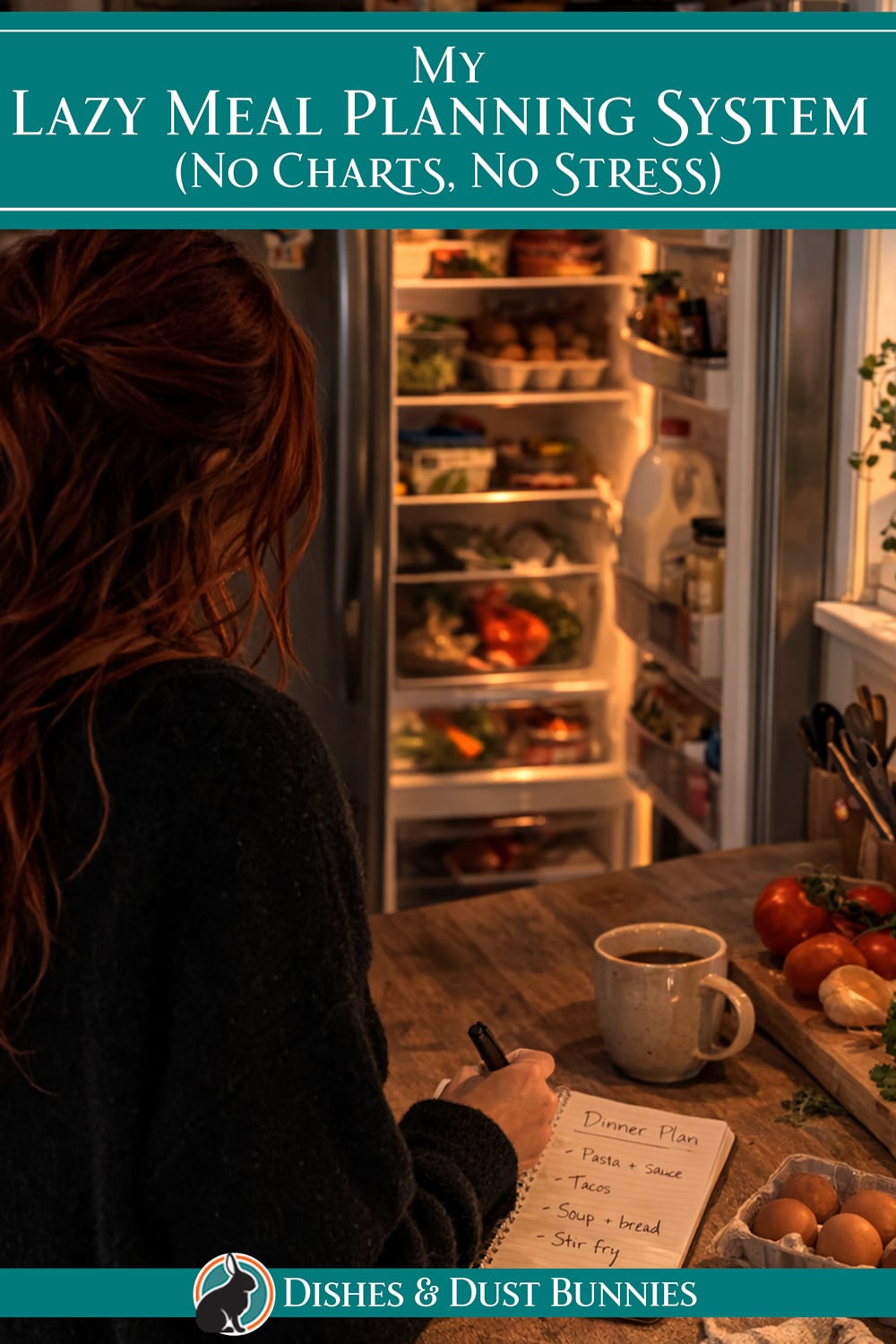
Eventually I stopped trying to meal plan the “right” way and created my own lazy meal planning system instead.
No charts. No apps. No complicated systems. Just a simple way to make dinner easier during busy weeks.
If you’re just starting out with meal planning, you might also like How to Start Meal Planning When You Hate Planning, where I share a simple way to begin without overthinking it.
- What “Lazy Meal Planning” Means to Me
- I Only Plan Dinners (That’s It)
- I Plan 4–5 Meals, Not a Full Week
- I Rotate the Same Types of Meals
- I Keep a Short “Default Meals” List
- My Grocery List Comes From My Meal Plan
- I Leave Room for “I Don’t Feel Like Cooking” Nights
- This System Changes Every Week — And That’s Okay
- You’re Allowed to Plan More — and You’re Allowed to Change Your Mind
- Why This Lazy Meal Planning System Actually Works
- If You Want to Try This System Yourself
What “Lazy Meal Planning” Means to Me
Lazy meal planning doesn’t mean you don’t care about feeding your family well. It means you care enough to keep things simple and sustainable, especially during busy or exhausting seasons of life.
For me, lazy meal planning is about doing just enough to make dinner easier. It’s flexible and forgiving, and designed to work in real homes where life doesn’t always go according to plan.
The goal isn’t perfect variety or picture-perfect meals. The goal is getting dinner on the table without feeling burnt out by the process.
When meal planning stays simple, dinner time usually becomes a lot less stressful too — something I talk more about in How to Make Dinner Time Less Stressful (Without Overcomplicating It).
I Only Plan Dinners (That’s It)
The biggest shift I made was realizing I didn’t need to plan everything.
I don’t plan breakfast, lunch, or snacks. Those meals tend to repeat themselves naturally, rely on leftovers, or get figured out in the moment. Trying to plan them only added more pressure and mental clutter.
Dinner is where most of the daily stress usually shows up. It’s the meal at the end of a long day when everyone is hungry and tired, and someone still has to figure out what to cook.
So that’s the only thing I focus on planning. Once dinner feels manageable, the rest of the day usually does too.
I Plan 4–5 Meals, Not a Full Week
Instead of planning seven dinners, I usually plan four or five.
There’s a simple reason for that. One night almost always turns into leftovers. Another night ends up being something easy or last-minute. Plans change, energy changes, and life gets in the way.
By planning fewer meals, I leave room for real life instead of setting myself up to feel behind. And because the plan feels realistic, I’m much more likely to actually follow it.
And on nights when none of the planned meals feel doable, that’s where simple backup dinners come in.
I Rotate the Same Types of Meals
I don’t reinvent the wheel every week. Instead, I rotate the same types of meals, which makes planning faster and much less mentally exhausting.
Most weeks follow a loose pattern. I usually include one comfort-food meal that feels cozy and filling, one easy pasta or casserole that doesn’t require much thought, one meal that creates good leftovers, and one very low-effort dinner for nights when cooking feels like too much.
Here are a few examples of what that looks like in real life:
Comfort food
- baked ziti
- lazy lasagna
- pot roast
- meatloaf
- chili
Easy pasta or casserole
- spaghetti with meat sauce
- tuna casserole
- chicken alfredo
- baked pasta
Leftover-friendly meals
- roast chicken with vegetables
- pork roast
- taco meat
- slow cooker meals
Low-effort dinners
- frozen pizza
- breakfast for dinner
- grilled cheese and soup
- sandwiches
The exact recipes change, but the structure stays the same. That means less thinking, less decision fatigue, and much easier meal planning week after week.
I Keep a Short “Default Meals” List
This is one of the most helpful parts of my lazy meal planning system, especially on weeks when my brain feels tired.
I keep a short list of meals I can always fall back on — the kind that don’t require looking up a recipe or making a special grocery trip. These are meals I can cook almost on autopilot.
Some of my default meals include:
- pasta with jarred sauce
- eggs and toast
- baked chicken with a frozen vegetable
- soup and sandwiches
- tacos
- grilled cheese and tomato soup
When I don’t know what to plan, I start with this list. Having a few reliable meals to fall back on removes a huge amount of decision stress.
These aren’t fancy meals, but they get dinner on the table — and sometimes that’s exactly what a busy week needs.
My Grocery List Comes From My Meal Plan
Once I decide on a few dinners, my grocery list becomes much easier.
I write down the meals, check what I already have, and then buy only what’s missing. I don’t overthink it or try to plan every ingredient perfectly.
This keeps grocery shopping quicker, less overwhelming, and often cheaper too.
Starting with the meals first also helps prevent those random grocery trips where you buy a lot of food but still don’t feel like you have anything to cook. It’s also one of the ways I keep grocery spending under control.
I Leave Room for “I Don’t Feel Like Cooking” Nights
Some days, even the easiest planned meal feels like too much. And that’s completely normal.
Instead of pretending those days won’t happen, I plan for them ahead of time. I make sure I always have a few freezer meals, pantry dinners, or an easy takeout option in mind.
Knowing those choices are available takes a lot of pressure off the rest of the plan. When a hard day hits, I don’t feel like I’ve failed. I just pivot to something easier.
This is exactly why simple backup dinners are such an important part of realistic meal planning.
This System Changes Every Week — And That’s Okay
Some weeks I plan more. Some weeks I plan less.
If I’m tired or overwhelmed, my meal plan gets simpler. If I have more energy, I might try something new.
The reason this system works is because it adapts to my life instead of forcing me to follow rigid rules. Some weeks call for easy dinners and shortcuts, and other weeks leave room for more cooking.
Flexibility is what makes meal planning sustainable long term.
Some weeks simply require a lower-effort plan, especially during busy or exhausting seasons.
You’re Allowed to Plan More — and You’re Allowed to Change Your Mind
Sometimes you might feel motivated to plan more. Maybe you want to plan a full week of dinners, prep meals ahead of time, or think further ahead. And that’s perfectly fine.
Lazy meal planning doesn’t mean you can’t plan in a more detailed way. It just means you don’t have to do it all the time, and you don’t have to stick to it rigidly.
Some weeks you might plan every dinner. Other weeks you might barely plan at all.
Both are completely valid.
The important part is giving yourself permission to change your mind. If you planned a meal but don’t feel like making it that night, you can swap it, simplify it, or save it for another day.
Meal planning should give you flexibility, not lock you into decisions you made days ago.
A plan that bends will always last longer than one that demands perfection.
Why This Lazy Meal Planning System Actually Works
This system works because it fits real life. It doesn’t rely on motivation, and it doesn’t punish you for having a hard week.
Instead of expecting perfect planning, it focuses on small decisions that make dinner easier. Planning a few meals, keeping simple defaults, and leaving room for flexibility takes a lot of pressure off the whole process.
It also makes meal planning something you can come back to even after a chaotic week. If things fall apart, you can simply start again the next time you plan groceries.
That’s what makes a system sustainable long term.
If You Want to Try This System Yourself
If you want to try lazy meal planning, start small.
Here’s a simple way to begin:
- Plan dinners only
- Choose four or five meals you already know how to make
- Keep a few default meals in mind for tired days
- Make sure you have a couple easy backup dinners available
You don’t need charts, schedules, or a perfect plan. You just need something that works for your home and your current season of life.
Even small changes to the way you plan meals can make dinner time feel a lot easier.
And if you’re building your own simple meal planning routine, the other articles in this series can help you keep things realistic and stress-free.
More Articles in the Simple Meal Planning for Busy Families (Without Losing Your Mind) Series
If you’re trying to make meal planning easier without complicated systems or overspending, these articles will help you build a simple, realistic approach and figure out what actually matters.
- How to Start Meal Planning When You Hate Planning — a simple, realistic way to get started without overthinking
- The Only Meals I Actually Plan (And What I Don’t Bother With) — a realistic look at what’s actually worth planning (and what you can skip)
- My Lazy Meal Planning System (No Charts, No Stress) — a simple system that keeps meal planning manageable
- How to Make Dinner Time Less Stressful (Without Overcomplicating It) — simple, practical ways to make evenings feel easier
- Backup Dinners: The Secret to Stress-Free Meal Planning — easy backup meal ideas for when real life happens
- Making Leftovers Work for Easy Meals (Without getting Bored) — simple ways to turn leftovers into meals you’ll actually want
- Smart Ways to Use Leftovers That Actually Work — practical ways to turn leftovers into new meals
- How I Meal Plan on a Tight Budget When Grocery Prices Are High — realistic strategies to save money on groceries
- 10 Budget-Friendly Ingredients That Help Stretch Meals Further — simple staples that help meals go further
- How to Plan Meals So Leftovers Are Easy to Use (coming soon) — plan meals with leftovers in mind so they’re easier to reuse
- Low Energy Meal Planning (For Tired Weeks) (coming soon)
- When Meal Planning Systems Become Overplanning (coming soon)
