
Making Leftovers Work for Easy Meals (Without getting Bored)
Leftovers always seem like a great idea… until they’re sitting in the fridge three days later and no one really wants them anymore.
Most of us plan to use leftovers, but they’re often an afterthought instead of part of the actual plan. So they get forgotten, feel repetitive, or just don’t sound appealing when you’re already tired.
The good news? Leftovers don’t need a complicated system to work—they just need a little intention.
When you start treating leftovers as flexible, built-in meals (kind of like the same idea behind backup dinners), they become one of the easiest ways to make weeknights simpler without extra effort.
It also takes a lot of pressure off compared to trying to follow a perfectly structured plan like we talked about in the lazy meal planning approach.
- Why Leftovers Often Don’t Work
- You Don’t Have to Save Every Leftover
- What It Means to Use Leftovers Intentionally
- When Leftovers Are Actually Better
- Easy Ways to Repurpose Leftovers (Without Getting Bored)
- How Leftovers Fit Into Backup Dinners
- How Many Leftover Meals to Plan For
- Make Leftovers Easy to See and Use
- A Simple Way to Start Using Leftovers
Why Leftovers Often Don’t Work
Leftovers don’t usually fail because of the food—they fail because of how we use them.
Most of the time, they’re not actually planned for. They just happen, and we hope we’ll eat them later. But when that moment comes, they’re competing with how tired you are and what actually sounds good.
Some nights, even reheating something can feel like more effort than you want to deal with.
Sometimes it’s just not appealing to eat the same thing again. Other times, they get forgotten in the fridge or don’t feel like a “real meal” when you need something easy.
It’s not that leftovers don’t work—they just don’t have a clear role in the plan.
This is often the same reason dinner can start to feel stressful during the week.
You Don’t Have to Save Every Leftover
Not every leftover needs to be saved or reused—and trying to do that can actually make things more stressful.
Some meals just don’t reheat well, or won’t realistically get eaten later in the week. It’s okay to be selective.
Focusing on the leftovers that are easy to use and actually appealing will make the whole system work better.
What It Means to Use Leftovers Intentionally
Using leftovers intentionally doesn’t mean turning everything into a brand-new recipe or planning out complicated transformations.
It just means giving leftovers a job before the week starts.
Instead of hoping they get used, you plan for them in a simple, flexible way—like knowing a bigger dinner will carry into the next day, or leaving space in your week for an easy “use what we have” night.
It’s the same idea as having backup dinners—you’re not relying on perfect execution, you’re building in options that make life easier when plans shift or energy is low.
Leftovers, pantry meals, and simple fallbacks all work together to make meal planning feel a lot less rigid, which is a big part of the lazy meal planning approach too.
When leftovers have a purpose, they stop feeling like random extras and start working for you.
When Leftovers Are Actually Better
Some meals are honestly better the next day—and planning for that can make leftovers a lot more appealing.
Things like soups, stews, casseroles, and pasta dishes often have more flavor after sitting for a bit. Even simple proteins like chicken or ground beef can be easier to work with the next day when you’re putting together something quick.
When you start recognizing which meals hold up well (or even improve), leftovers stop feeling like a compromise and start feeling like a shortcut.
This can also make it easier to plan those meals on busier days, knowing they’ll still taste great the next day.
Easy Ways to Repurpose Leftovers (Without Getting Bored)
The easiest way to use leftovers without getting bored isn’t to reinvent them completely—it’s to change how you think about them.
Instead of seeing leftovers as the same meal repeated, think of them as ingredients you can reuse in a slightly different way.
For example, leftover chicken might turn into wraps or sandwiches instead of another full plated dinner. Extra ground beef can be added to pasta or tossed into a quick skillet meal, and roasted vegetables can be mixed into bowls, eggs, or paired with something simple on the side.
Sometimes just changing the format—from a full dinner to something more casual—is enough to make it feel like a different meal.
It can also be a simple way to make ingredients go further without cooking something completely new.
These aren’t complicated changes—but they’re often enough to make something feel like a different meal.
On low-energy nights, eating leftovers exactly as they are still counts. The goal isn’t variety for the sake of it—it’s making things easier.
If you want more specific ideas (and actual meal combinations), that’s something we can dive into separately—but this is the simple shift that makes leftovers much easier to use.
How Leftovers Fit Into Backup Dinners
Leftovers and backup dinners serve the same purpose—they make sure you have something easy to fall back on.
On nights when plans fall apart or you don’t feel like cooking, leftovers can step in as a ready-made meal with no extra effort.
When you start thinking of leftovers as part of your backup plan—not just extra food—they become much more useful and a lot less likely to go to waste.
How Many Leftover Meals to Plan For
You don’t need to plan out leftovers for every day—just leave a little space for them.
For most weeks, one or two leftover-based meals is plenty. That might come from cooking a slightly bigger dinner once or twice, or simply having extras to use.
The goal isn’t to perfectly schedule every leftover—it’s to give yourself some flexibility so they actually get used.
If you try to plan too many, they start to feel repetitive. But if you don’t plan for them at all, they’re easy to forget.
This can also help stretch meals a little further without adding extra work during the week.
Keeping it simple usually works best.
Make Leftovers Easy to See and Use
Even when you plan to use leftovers, they’re easy to forget if they’re out of sight.
One simple thing that makes a big difference is keeping leftovers visible and easy to grab.
If they’re pushed to the back of the fridge or packed in a way that takes effort to reheat, they’re much more likely to get forgotten.
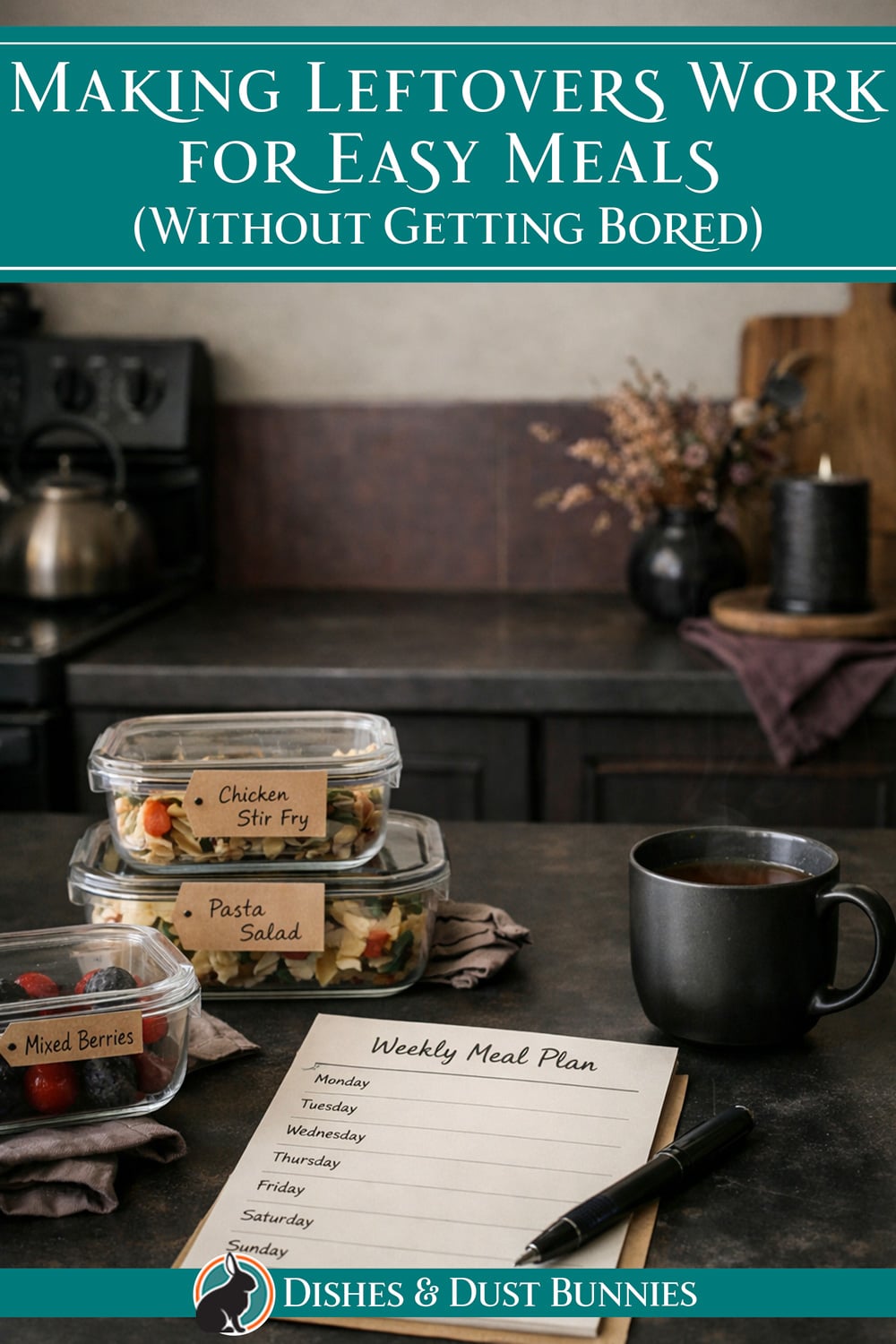
Even small habits—like storing them at eye level or in clear containers—can make it easier to actually use what you already have.
A Simple Way to Start Using Leftovers
If you want to start using leftovers more consistently, you don’t need a big system—just one small shift.
When you’re planning your week, pick one or two meals that will likely create leftovers, and leave a little space to use them. That’s it.
You don’t have to decide exactly how they’ll be used ahead of time. Just knowing they’re there as an option makes it much easier to reach for them when plans change or you need something easy.
And if you don’t end up using them right away, you can always store most leftovers in the freezer for a meal another time.
This can also help reduce waste and make your grocery budget go a bit further.
Over time, this becomes second nature. Leftovers stop being something you should use, and start becoming one of the easiest parts of your meal plan.
Using leftovers doesn’t have to be complicated or perfectly planned to work. With a little intention, they can become one of the easiest ways to make meals more flexible, reduce waste, and take pressure off your week.
It’s not about always using everything—it’s about giving yourself simple options that make real life easier and a system that actually works with your week.
More Articles in the Simple Meal Planning for Busy Families (Without Losing Your Mind) Series
If you’re trying to make meal planning easier without complicated systems or overspending, these articles will help you build a simple, realistic approach and figure out what actually matters.
- How to Start Meal Planning When You Hate Planning — a simple, realistic way to get started without overthinking
- The Only Meals I Actually Plan (And What I Don’t Bother With) — a realistic look at what’s actually worth planning (and what you can skip)
- My Lazy Meal Planning System (No Charts, No Stress) — a simple system that keeps meal planning manageable
- How to Make Dinner Time Less Stressful (Without Overcomplicating It) — simple, practical ways to make evenings feel easier
- Backup Dinners: The Secret to Stress-Free Meal Planning — easy backup meal ideas for when real life happens
- Making Leftovers Work for Easy Meals (Without getting Bored) — simple ways to turn leftovers into meals you’ll actually want
- Smart Ways to Use Leftovers That Actually Work — practical ways to turn leftovers into new meals
- How I Meal Plan on a Tight Budget When Grocery Prices Are High — realistic strategies to save money on groceries
- 10 Budget-Friendly Ingredients That Help Stretch Meals Further — simple staples that help meals go further
- How to Plan Meals So Leftovers Are Easy to Use (coming soon) — plan meals with leftovers in mind so they’re easier to reuse
- Low Energy Meal Planning (For Tired Weeks) (coming soon)
- When Meal Planning Systems Become Overplanning (coming soon)
